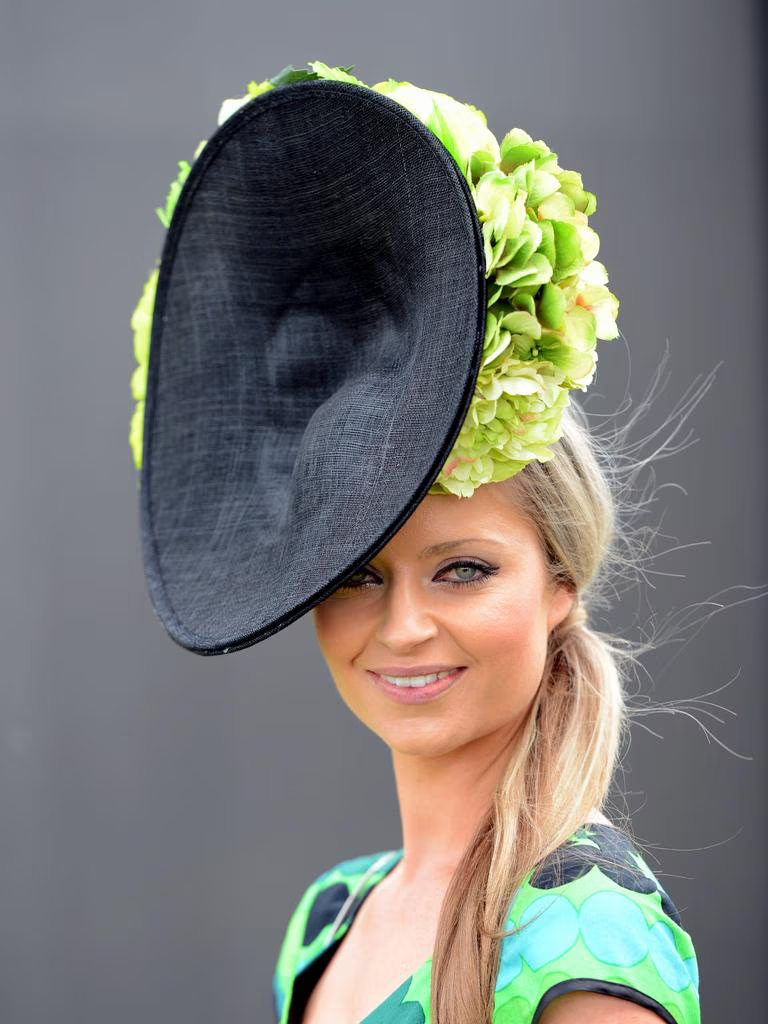
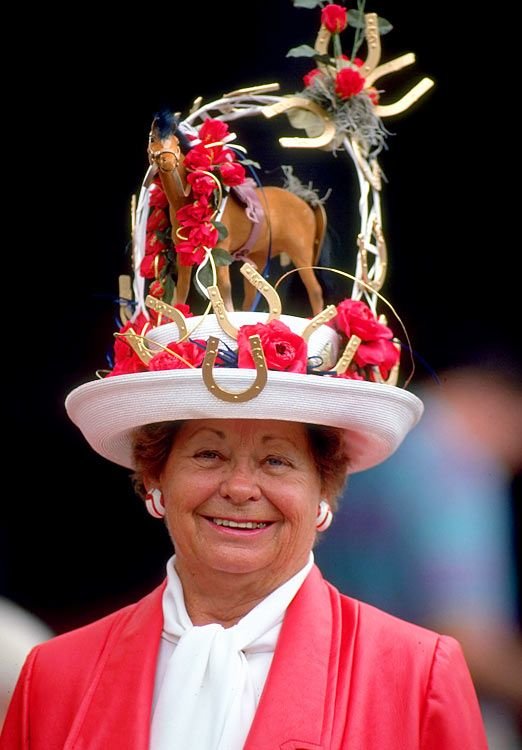
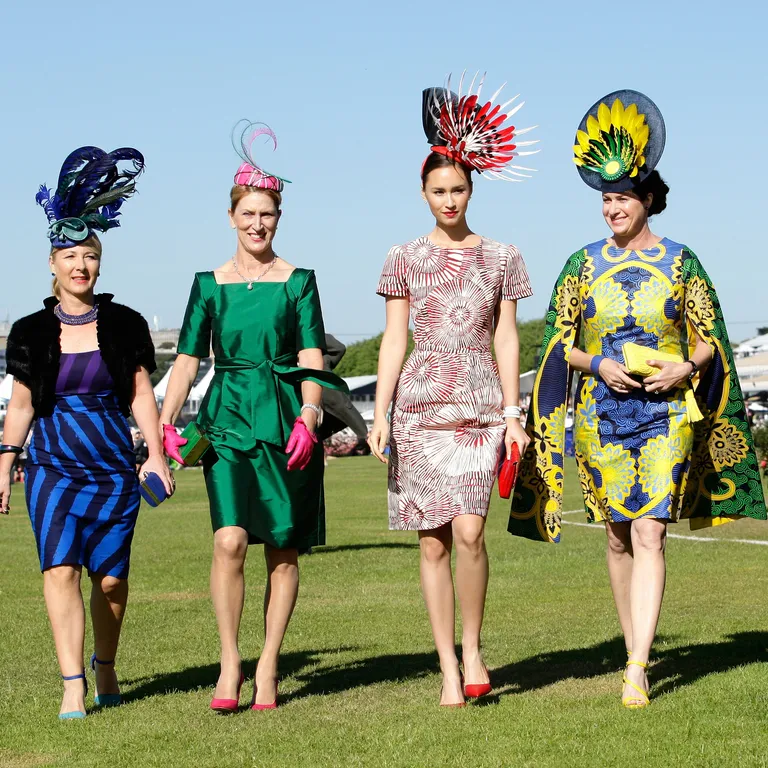
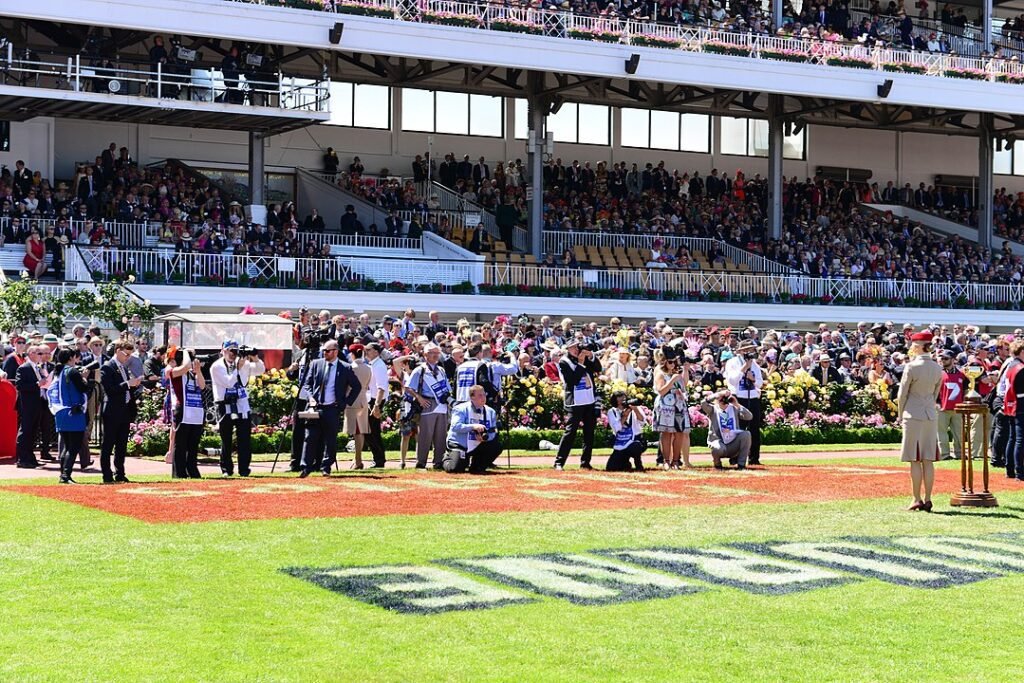
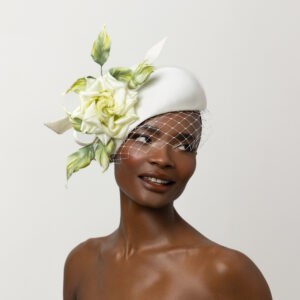
Arturo's hats have been featured prominently at the Mebourne Cup.
He notes that "for many women attending for the first time, black and white hats are de rigeur."
Arturo Rios offers many custom hats for this occassion, including some "Best Of" winners!
We are currently working on several bespoke hats for this date. We can accept new orders.
These will require expedited manufacture and shipping in addition to the hat's published cost. We can advise of total cost before purchase.
Let us know your interest and we would be happy to accommodate.


When the Melbourne Cup was first run in 1861, there were two organising committees controlling horse racing in Victoria, the Victorian Turf Club (1852) and the Victorian Jockeys Club (1857).
The Melbourne Cup was introduced in 1861 by the Victorian Turf Club to trump the success of Victorian Jockey Club races such as the Two Thousand Guineas.
As a handicap race, the Melbourne Cup introduced a level of speculation that he club hoped would attract more entries, and therefore higher prize money. The two competing organisations disbanded in 1864, before merging to form the Victorian Racing Club, which has controlled racing in Victoria and the Melbourne Cup ever since.
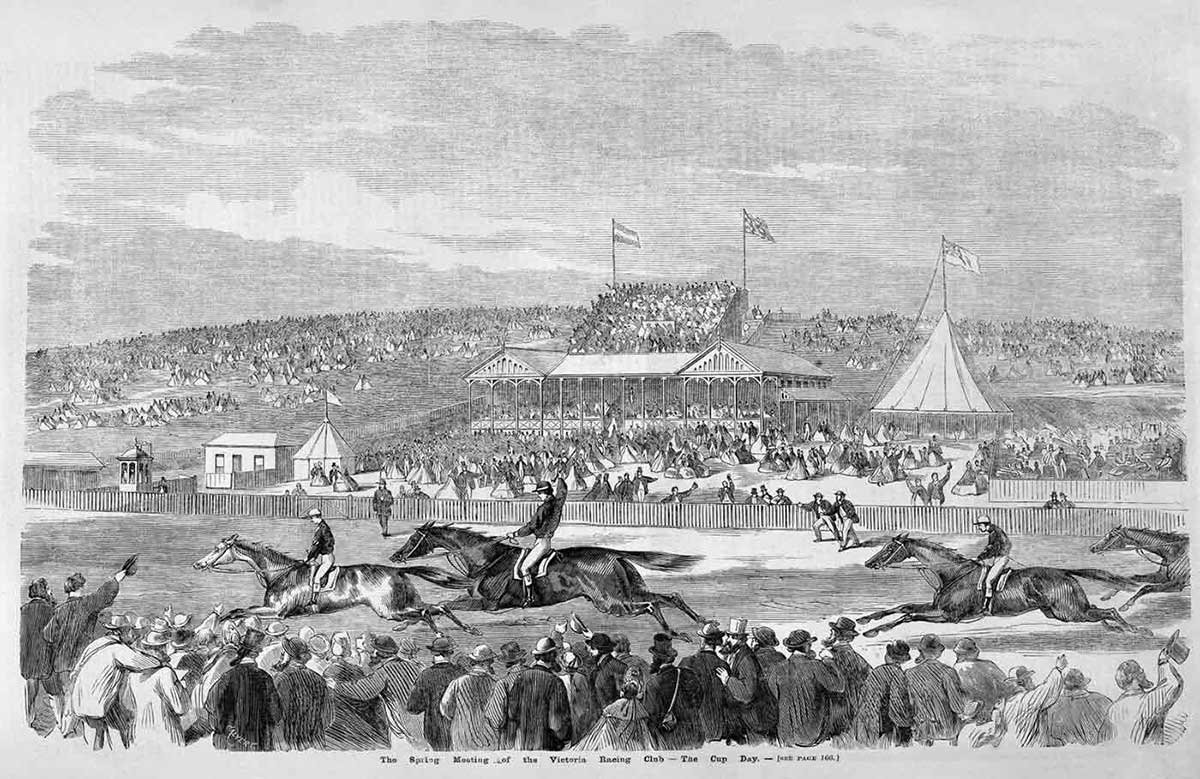
Although the Melbourne Cup today is well-known in Australia for being run on the first Tuesday in November, this hasn’t always been the case. The 1866 Melbourne Cup race was run on a Thursday, and in 1867 the Cup was run in October. It wasn’t until 1875 that the race was run on the first Tuesday of November.
Although the three-handled loving cup is widely recognised as the traditional cup design, this has only been the case since 1919. Before then the cups came in a variety of styles, with each year having a completely original design. Some years no trophy was presented at all. In fact, for the first few decades of the race, it was more common for no trophy to be awarded.
Prize money and ‘a monstrosity’
The winner of the 1861 Melbourne Cup was awarded a gold watch, and for the next two years a cash purse was the major prize. A trophy was first awarded in 1865.
The owner of the winning horse Tory Boy, Mr Marshall, is claimed to have described the English-made trophy as a monstrosity. He immediately sold it to the Flemington Hunt Club, which rebranded it as the trophy for its annual cup.
This trophy therefore is now inscribed as the Flemington Hunt Club Cup awarded to the 1873 winner, Babbler. This trophy was sold in the 1970s by Christies and is now owned by wine merchant Wolf Blass.
Source—National Museum Australia