Peacock Feathers

Peacock Feathers

Nature & Craft · Couture Millinery

The Pale Plume

White Peacock Feathers, and the Long History Behind a Rare Feather

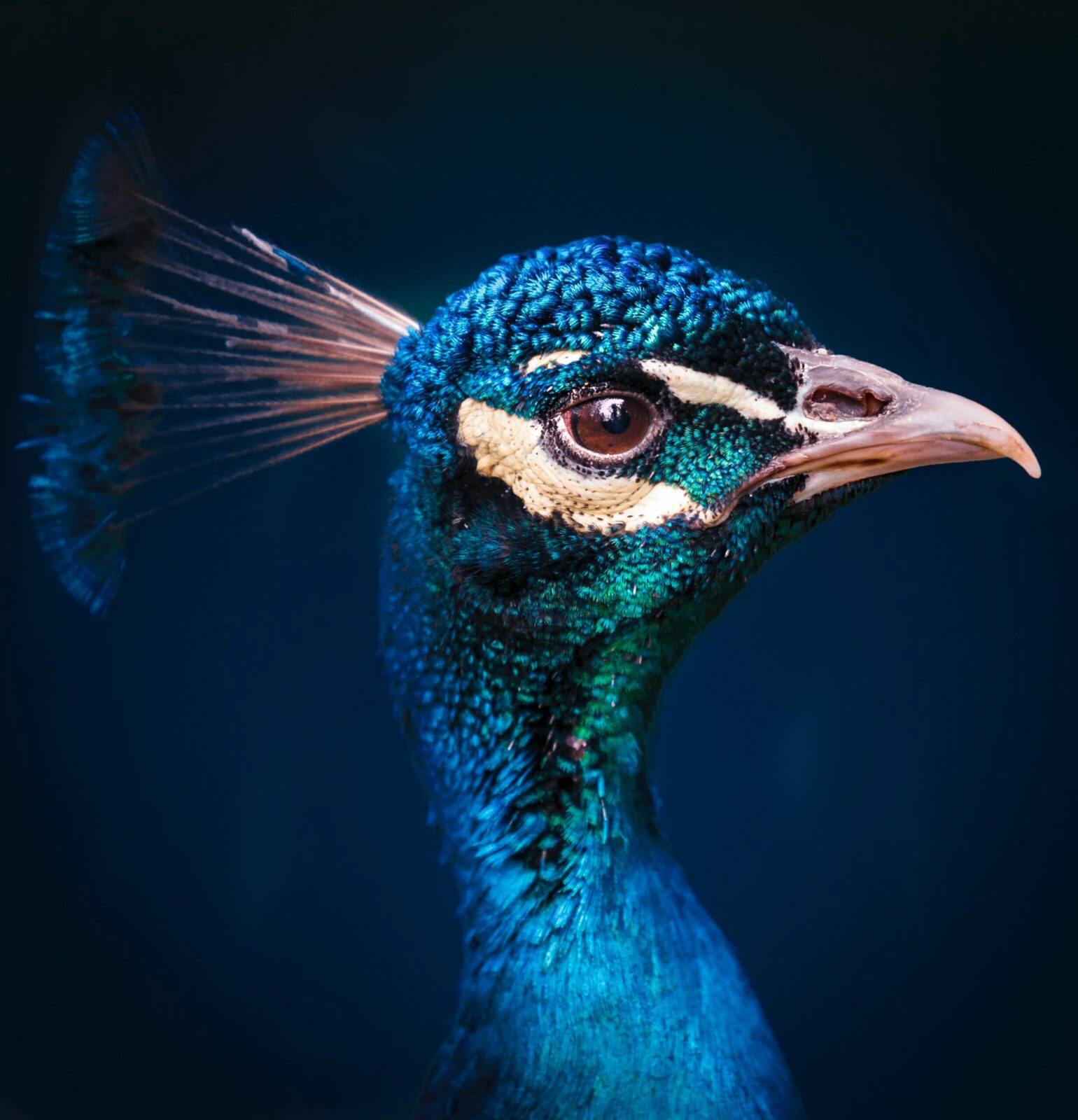
Of all the materials that pass through a milliner's hands, few carry as much history — or as much myth — as the peacock feather. And of all peacock feathers, none is rarer or stranger than the white one: the plume of a leucistic bird, stripped of color but not of form. Before it ever reaches a hat block, that feather has already traveled through centuries of royal courts, religious symbolism, and superstition. Understanding that history is part of understanding why it still commands a room today.

A Feather Long Before It Was a Trend

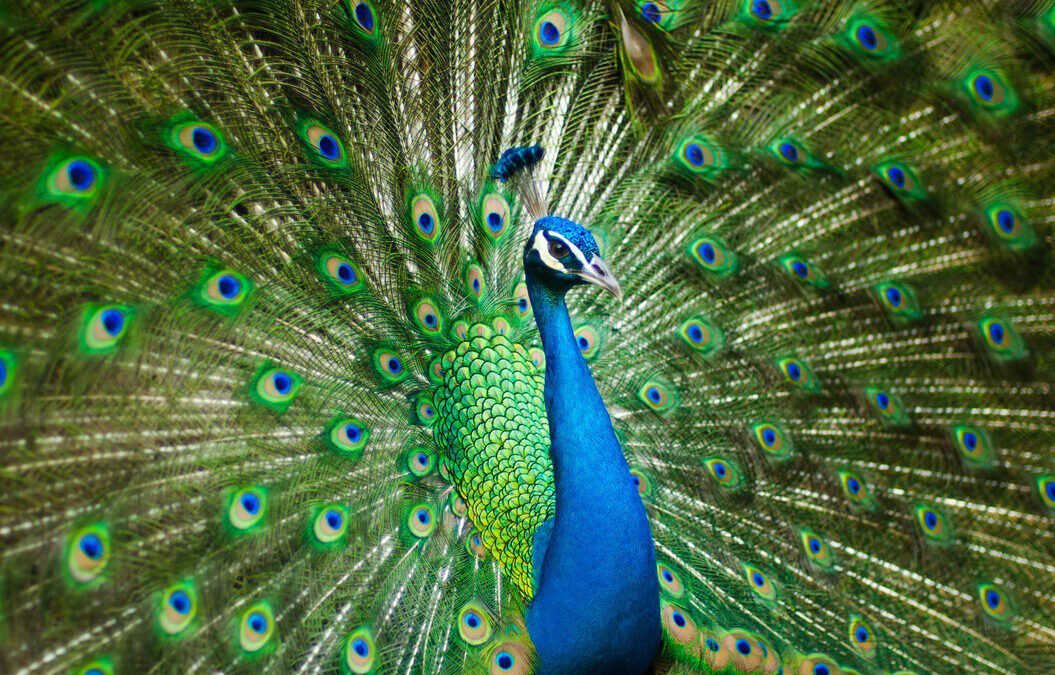
The peacock feather has never been just decoration. In Hindu tradition, it is inseparable from Krishna, who is depicted wearing a peacock crown — the feather standing in for beauty, protection, and divine grace. In ancient Greek and Roman mythology, the "eyes" on the feather were said to be the hundred eyes of the giant Argus, placed there by the goddess Hera, linking the feather forever to watchfulness and immortality.

By the Byzantine and Persian courts, peacock feathers had become a shorthand for royalty itself — woven into thrones, fans, and ceremonial dress. Centuries later, in Qing dynasty China, an actual peacock feather affixed to a mandarin's hat denoted rank and imperial favor, awarded rather than purchased. A feather, in other words, has rarely just been a feather. It has been a rank, a blessing, a warning, and a crown.

Curiously, the feather also picked up a reputation for bad luck in parts of Victorian Britain — theatre folklore in particular held that the "eye" pattern invited misfortune onstage, a superstition some performers still observe today. That tension between glamour and omen is part of what makes the feather such rich material for a milliner: it has always meant more than one thing at once.

The White Exception

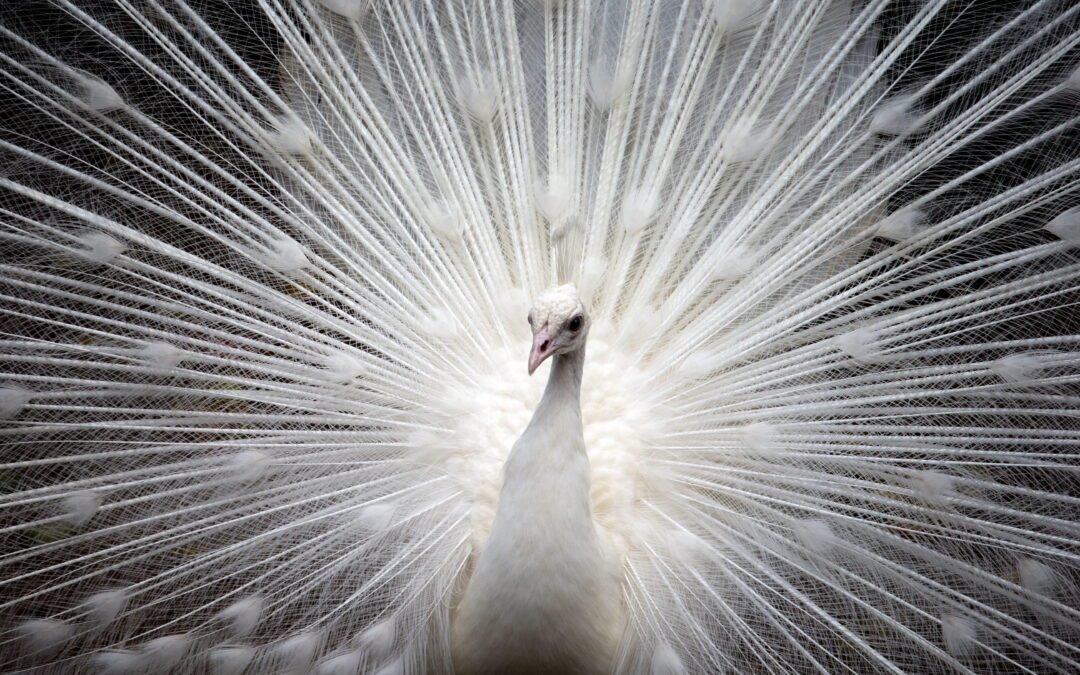
Set against that long, colorful history, the white peacock feather is something else entirely: an anomaly the bird itself didn't choose. Leucism — a genetic condition that suppresses pigment while leaving the feather's underlying structure intact — produces a bird rendered almost entirely in white, eyes and all, with the famous "eye" motif still faintly visible in the weave of the plume when the light catches it right.

Because true leucistic peafowl are uncommon, white plumes have historically carried their own mystique — often associated with purity, transcendence, and the otherworldly in a way standard iridescent feathers, for all their color, never quite achieved. Where a traditional peacock feather says opulence, a white one says something closer to reverence.

In the Milliner's Hands

For a couture milliner, the appeal of the white plume is structural as much as symbolic. Strip away the iridescence, and what remains has to work on shape alone — the curl of the frond, the architecture of the eye rendered in tone rather than color. That makes it a favorite for bridal work and for monochrome or minimalist pieces, where a feather needs to read as elegant rather than showy.

Milliners will curl, trim, or strip the barbs down to the quill depending on the effect they're after: a single dramatic sword feather swept off a brim for drama, or a cluster of softer wisps worked into the crown for texture. Set against black felt or veiling, a white plume becomes a study in restraint — proof that a feather doesn't need color to command attention.

Responsible Sourcing, By Design

None of that history or craft matters much if the material behind it comes at the expense of the bird. Ethical feather sourcing means collecting only molted feathers — those a peacock has naturally shed, rather than plucked — a practice that lets the plumage be gathered without harm to the animal at all.

A note on our sourcing: every feather used in our millinery, including the pale plumes featured in this collection, is collected only when molted — never plucked. It's a slower, more selective way to work, but it means the material's history and the bird's welfare aren't in conflict.

Read more about this

Why the Pale Plume Still Matters

A white peacock feather asks a milliner to trust form over flash — the same instinct that has made monochrome millinery endure through every trend cycle. It arrives already carrying centuries of meaning: crown, blessing, omen, rarity. What a milliner adds is simply the setting. The feather has been doing the rest of the work for a very long time.

Eco-Millinery

Eco-Millinery

|

I draw so much inspiration from the beauty the world gives us freely. It is imperative that we ensure that these wonders are not destroyed.

—Arturo

Sustainable Practices

Hat making has been inherently damaging to the environment.

With this understanding, Arturo has long been at the forefront of ecologically-sound practices. It's a commitment to the environment, but also to his clients

The term "mad as a hatter" is derived from the mercury-laden felt used in early production. Dyes were often a chemical brew of arsenic, formaldehyde and some very powerful carcinogens. Water usage can be astronomical and recycling, well, doesn't exist. We've decided to be transparent and tell you how we're mitigating these risks.

Sourcing

Most environmental problems are "legacy" issues, meaning that old, harmful practices are continued simply because that was the only option. We're taking a new look and are making some firm statements about:

ArturoRios.com | 2023

Animal-Derived Products

Products which are animal-derived (feathers, mostly) are procured from vendors who strictly abide by cruelty-free practices. When possible, we use feathers that have naturally been shed.

Textiles

Our silk and other textiles are produced using organic, naturally-derived resources when possible. Water use is monitored closely and chemicals, when used at all, are deployed in a closed-loop ecology.

Minerals & Gems

When we do utilize gems and minerals (crystals, for example) we insure that they are from vendors that do not engage in strip mining or deforestation. All crystals used are lead-free glass.

Human Rights

Hat making uses many components. Human skill is at its core. We believe strongly that any material produced or skill employed is done so fairly, equitably and with social responsibility.

RDS-certified means a product contains down and feathers from ducks and geese that have been treated humanely, as verified by the Responsible Down Standard. This certification ensures that no live-plucking or force-feeding occurred and that the birds were cared for according to leading animal welfare standards, often referred to as the Five Freedoms of Animal Welfare. The standard also provides a verifiable chain of custody to ensure the down's origin can be traced from farm to finished product. 

Key aspects of the RDS certification
  • Animal welfare: 

    The standard prohibits cruel practices like live-plucking and force-feeding, ensuring animals are treated with respect. 

  • Supply chain traceability: 

    It requires a certified chain of custody, so the down can be tracked from the farm through the entire supply chain to the final product. 

  • Third-party auditing: 

    Professional, independent third-party certification bodies audit each stage of the supply chain to ensure the standard is met. 

  • Five Freedoms: 
    The certification is based on the principle of respecting the Five Freedoms of animal welfare, which include freedom from hunger and thirst, freedom from discomfort, freedom from pain, injury, or disease, freedom to express normal behavior, and freedom from fear and distress. 

The fashion industry has a celebrated history with feathers. They were one of Coco Chanel’s favourite motifs, frequently used as embellishments in her collections, as well as those of her contemporaries Cristóbal Balenciaga, Christian Dior and Yves Saint Laurent. The late Alexander McQueen was inspired by the feather – “[its] colours, its graphics, its weightlessness and its engineering” – and used it elaborately in his designs.

Feathers flutter down the catwalks of fashion houses including Saint Laurent, Maison Margiela and Moschino, making them a high street trend.

Source—The Guardian

Arturo is firmly committed to sourcing feathers from well-established, licensed vendors who are routinely audited and proof of sustainable ecological practices must be proven.

If you have any concerns, comments or opinions on our commitment to sustainability in our industry, we would love to hear about it in the comments section below.

The Responsible Use of Feathers

The Responsible Use of Feathers

The Sustainable Sourcing of Feathers

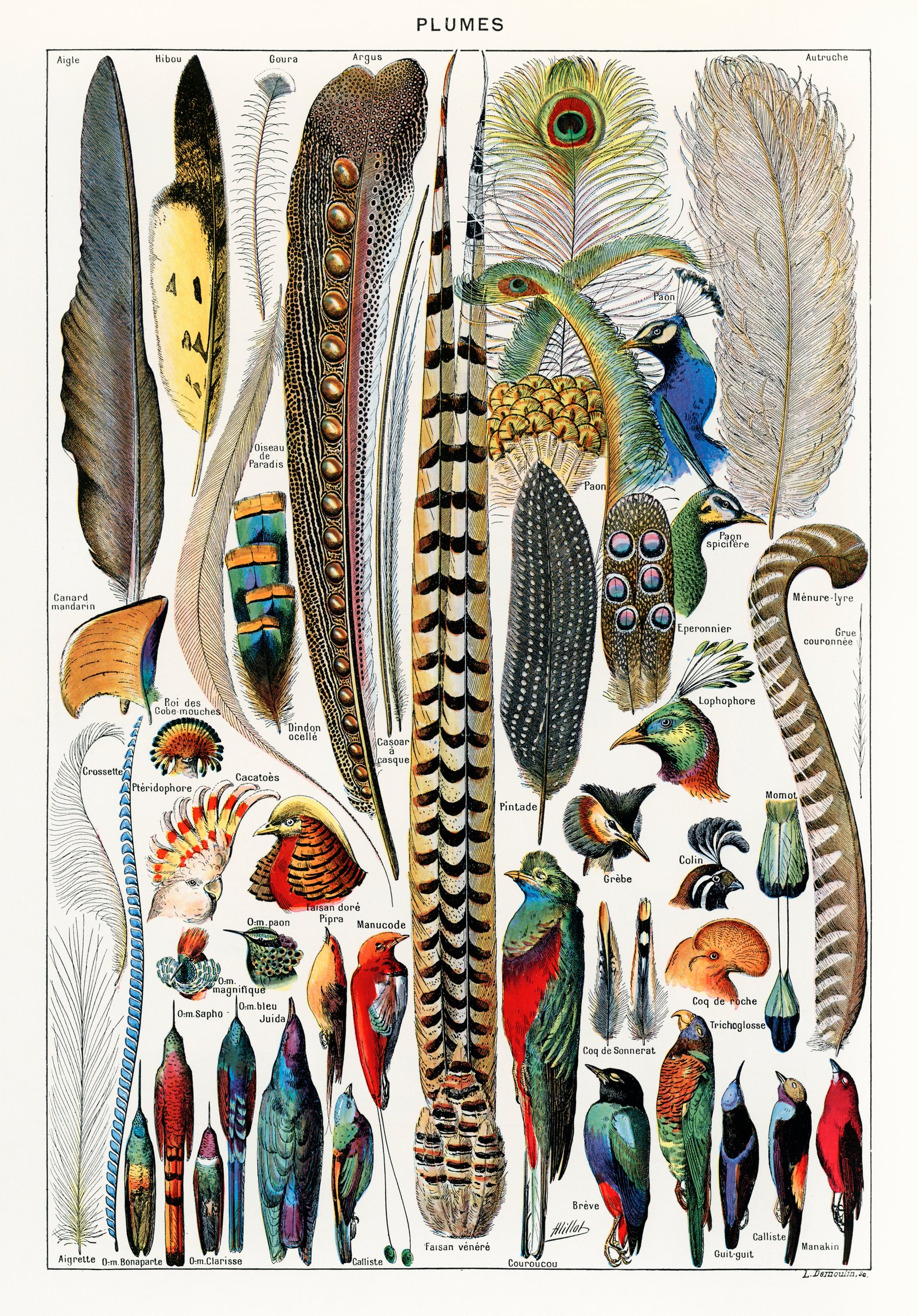
Plumes - Feathers (1900) by Adolphe Millot (1857-1921), a collection of different plume types.

The use of feathers in millinery has a long history.

Feathers were first used to decorate hats in Europe in the early 14th century. By the 16th century, feathers were a popular accessory for the wealthy in fashion centers like Milan (from which "millinery" is derived) Paris, Vienna, Florence, and Prague. 
Feathers became more widespread in fashion in the late 18th century due to the Industrial Revolution, which made luxuries more accessible to the masses. Milliners, or hat makers, used new technology to create vibrant designs that added drama to women's fashion. Feathers became a status symbol and were produced on an industrial scale throughout the 1800s.
The demand for bird feathers grew to such a height that ostrich feathers were traded at twice their weight in gold in the late 1800s. The consequences of such unsustainable trade quickly decimated bird species valued for their feathers.

In 1896 the American socialite and amateur naturalist Harriet Hemenway and her cousin Minna Hall led a boycott of feathered hats which attracted 900 participants.The action led to the formation of the National Audubon Society and passage of the Weeks-McLean Law (the Migratory Bird Act), which outlawed market hunting and the interstate transport of birds.

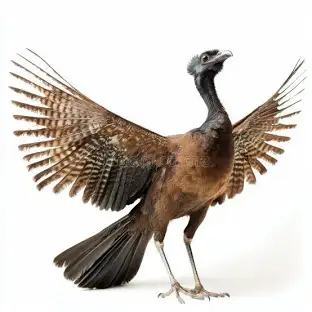
the Lyrebird

the Egret

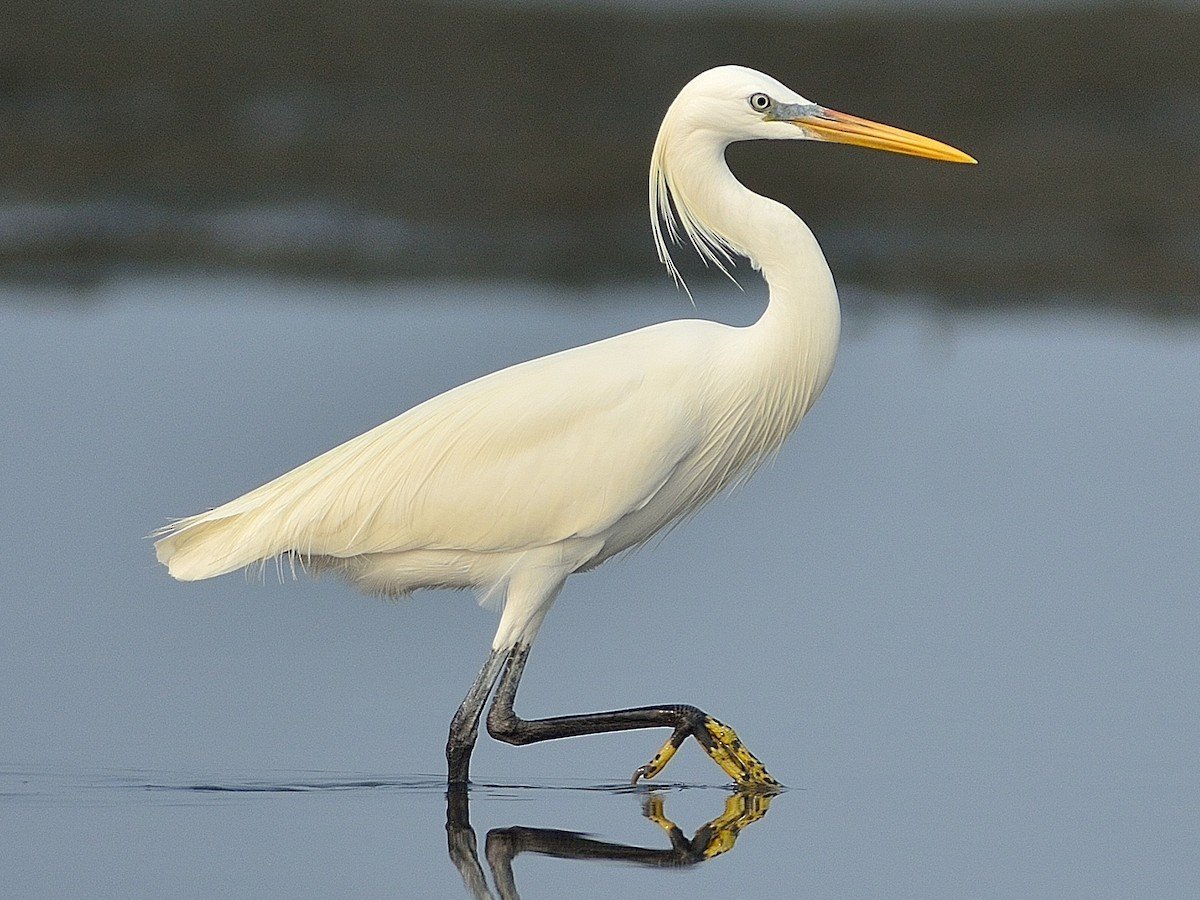
Egrets were almost extinct in the 1900s, hunted for their graceful, long, white feathers. Today, the bird is protected and their numbers have rebounded. Unfortunately, the Lyre bird in Australia did not meet a similar outcome and is still dangerously close to extinction.

All birds naturally shed their feathers about once a year. This is the preferred method of collection as it causes no stress on bird populations and is by far the most humane sourcing of exotic feathers. We work with local US farmers who raise white peacocks and collect the molted feathers. Exotic feathers from around the world are all purchased through permitted brokers who are fully compliant with domestic and international laws and conventions.

We currently source our feathers from a distributor in the US, who has the proper permits and strictly obeys regulation with the appropriate US agencies. These fathers are tightly controlled and we review the accuracy of their permitted use.
Our current collection of fascinators feature ostrich, goose, peacock and other rare species which are certified 100% cruelty-free and are sustainably gathered.

The ethics of down feathers are controversial, with some sourcing practices being inhumane, but ethically sourced and certified down is available. You can identify ethical down by looking for certifications like the Responsible Down Standard (RDS) or Global Traceable Down Standard (GTDS), which ensure no live-plucking or force-feeding occurs and that animals are not harmed. Alternatively, you can choose products with recycled or pre-loved down, which avoids new animal welfare issues entirely.  

Showing 19–21 of 22 resultsSorted by latest

"It is personally important to me that our feathers are used responsibly and sustainability to preserve their outstanding beauty and broad variety," says Arturo. "They inspire such beautiful designs. And they are truly a unique gift from Nature."
Arturo Rios
Audubon Society

Read about this outstanding organization, founded in 1905.