Techniques & Materials: Crystals & Gems

Techniques & Materials: Crystals & Gems

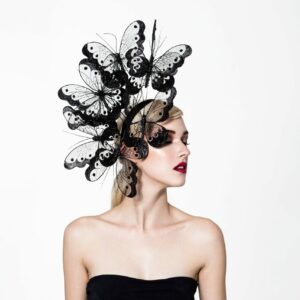
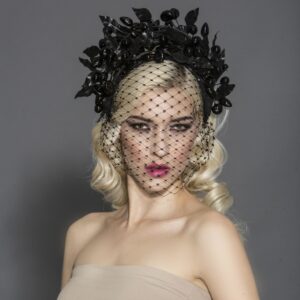
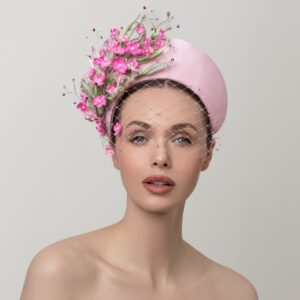
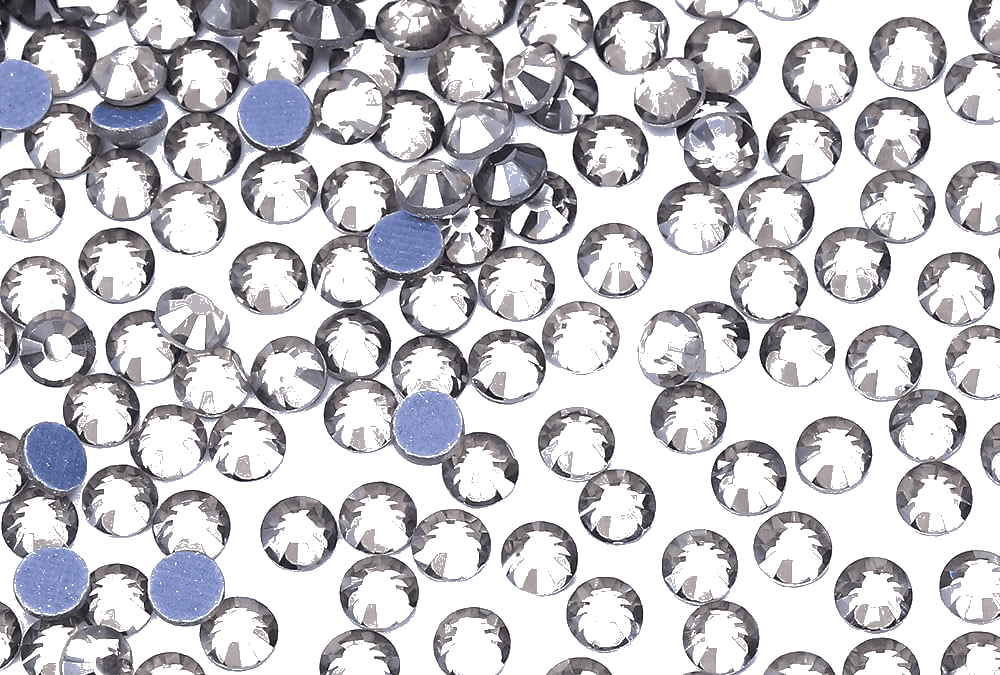
Crystals and gems have long been admired for their beauty and unique properties. While most people might think of them as adornments for jewelry, they have found their way into the world of fashion, particularly in hat making.

From glittering gemstones to enchanting crystals, these stunning materials add a touch of elegance, personality, and even a hint of mystique to headwear.
Ancient Civilizations and Gemology

The history of crystals and gems can be traced back to ancient civilizations, where people believed these stones held power and significance beyond mere aesthetics. Egyptians adorned their headdresses with lapis lazuli and turquoise, while Romans flaunted their wealth with intricate crystal embellishments. These societies understood that wrapping one's head in sparkling stones was not just a fashion statement; it was a symbol of status and spirituality.

Crystals in Historical Headwear

Throughout history, hats have served as more than just protection from the elements; they’ve been symbols of power, authority, and style. From the Renaissance-era plumed hats bedecked with jewels to the ornate headpieces of royal ceremonies, using crystals in headwear has always been a way to elevate one’s look.

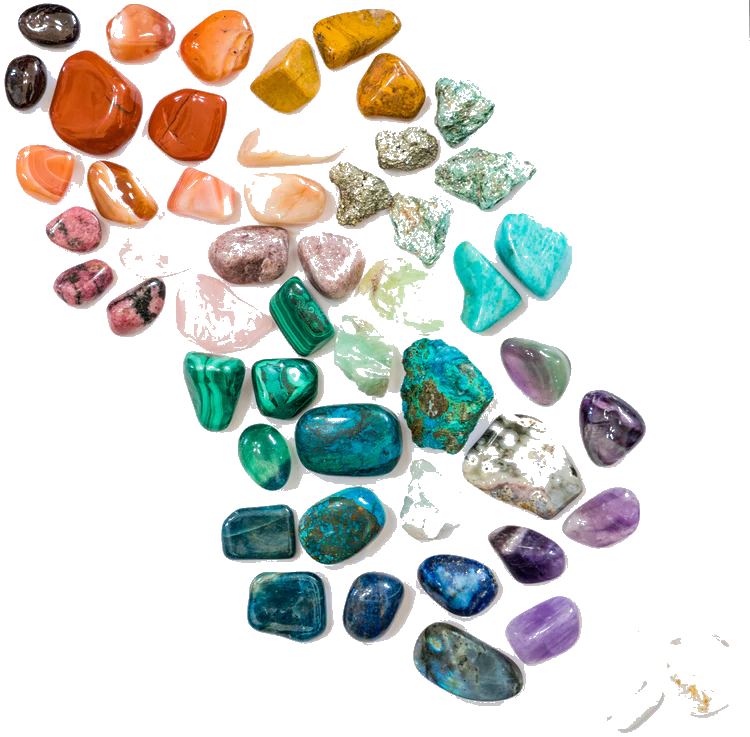
When it comes to hat design, not all crystals and gems are created equal. Popular choices include amethyst for its calming properties, rose quartz for love and compassion, and clear quartz for clarity and amplification. Each crystal adds a unique flair and vibe to your hat, allowing wearers to express themselves and channel specific energies.

Metaphysical Properties of Crystals

Crystals are not just shiny rocks; they carry a wealth of metaphysical properties that can add a little extra magic to your hat. For instance, amethyst is said to promote calm and clarity—perfect for those high-pressure moments when you need to look chic without stressing out. Meanwhile, rose quartz is the go-to for love vibes, so if your hat is adorned with it, you're essentially saying, "I’m a lovable trendsetter!" Each crystal has its own unique vibe, making your hat not just a fashion statement, but a personal talisman.

Design Considerations and Aesthetics

When incorporating crystals into hat design, Arturo keeps aesthetics in mind. Consider the overall theme, color palette, and the hat’s purpose. A beach hat adorned with shells and aquamarine crystals may call for a different design approach than a formal felt hat embellished with dark, luxurious gemstones. 

Arturo works with each client to find the best crystals & gemstones tailored to each AR hat.
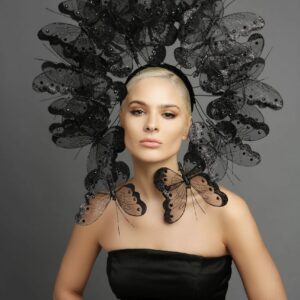
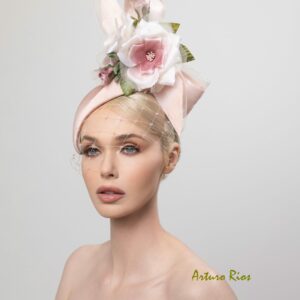
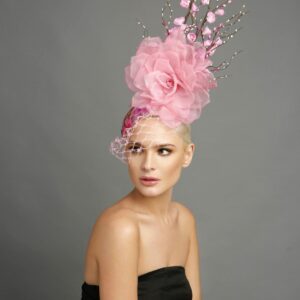
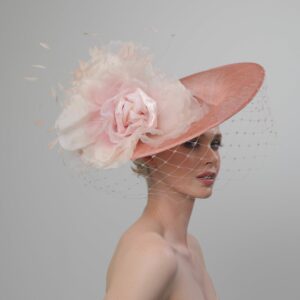
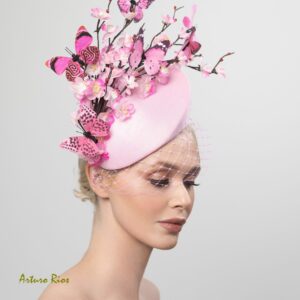
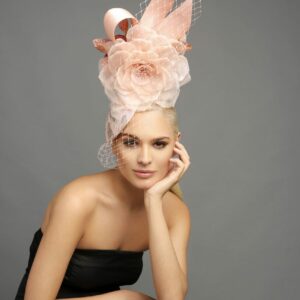
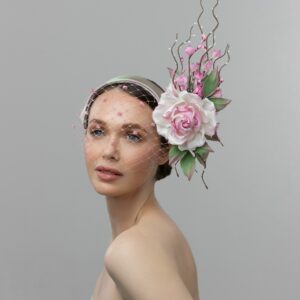
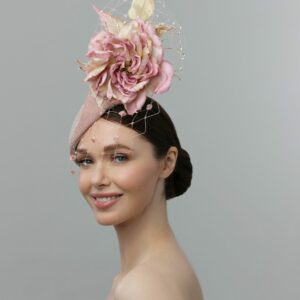
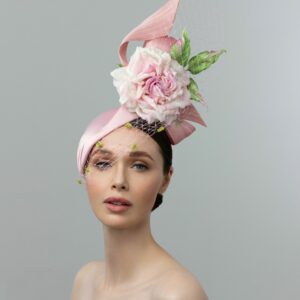
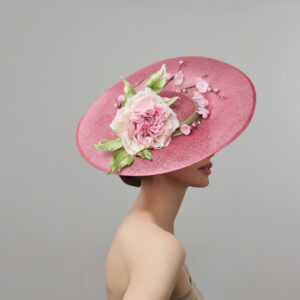
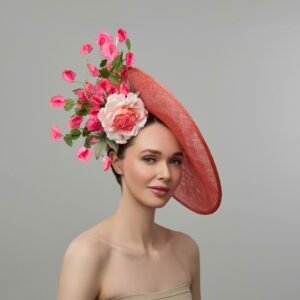
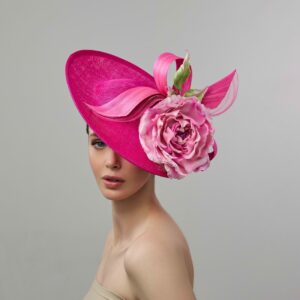
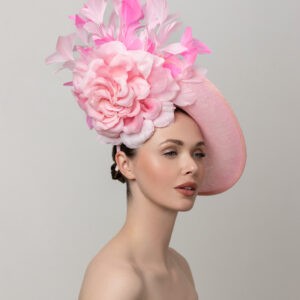
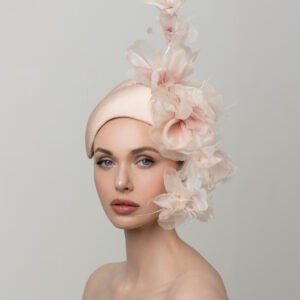
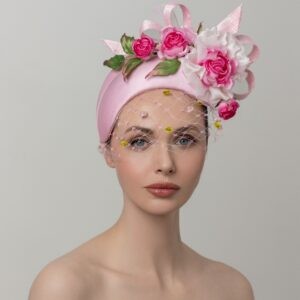
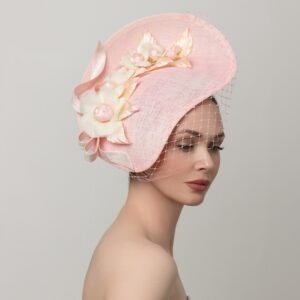
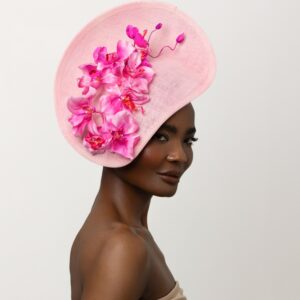
Colors: Pink Influences

Colors: Pink Influences

Mix red and white, and you get pink. Pink has many different shades, intensities, and variations ranging from orange-based salmons through blue-based berry tones, but for most, pink is recognized as a pale red.

Pink is, however, not so simple. It is sophisticated and elegant. It communicates youth, passion, love and endearment. It is associated with concepts of feminity, sweetness, naïveté and compassion. 

From its historical roots to its contemporary interpretations, pink serves not only as a visual statement but also as a symbol that conveys complex narratives about femininity, youth, and even rebellion.

Arturo continues to explore innovative techniques and styles to express the color pink's universal appeal.

Color is more than just eye candy; it’s a powerful communicator in the fashion world. Different hues evoke different feelings and reactions. For Arturo, this means that choosing the right color can sway the wearer’s confidence, happiness, and even moods. 


Pink in the 18th and 19th Centuries

Back in the day—think powdered wigs and corsets—pink was a color of privilege and status. It was favored by the aristocracy, who donned it for its playful yet posh vibe.

Milliners used soft pink silks and velvets, making hats that were not merely functional but also symbols of wealth. During this time, pink was a bold choice, reserved for those who could afford to flaunt it. As the centuries rolled on, it stuck around, evolving from a royal hue to a favorite of the masses.

The Evolution of Pink in Millinery through the Decades

Fast forward to the 20th century: pink bounced around like a fashionable game of hopscotch. From the flapper era, where it was used in daring designs, to the post-war fascination with femininity, pink became a staple in women’s fashion. As decades passed, styles shifted, and so did the shades of pink in millinery. Baby pink gave way to hot pink, and by the time the ‘80s rolled around, neon pink burst onto the scene like it owned the block. Each era redefined pink’s place in hats, from elegant fascinator to oversized sun hat, making it an ever-evolving symbol of style.

The Associations of Pink with Femininity and Romance

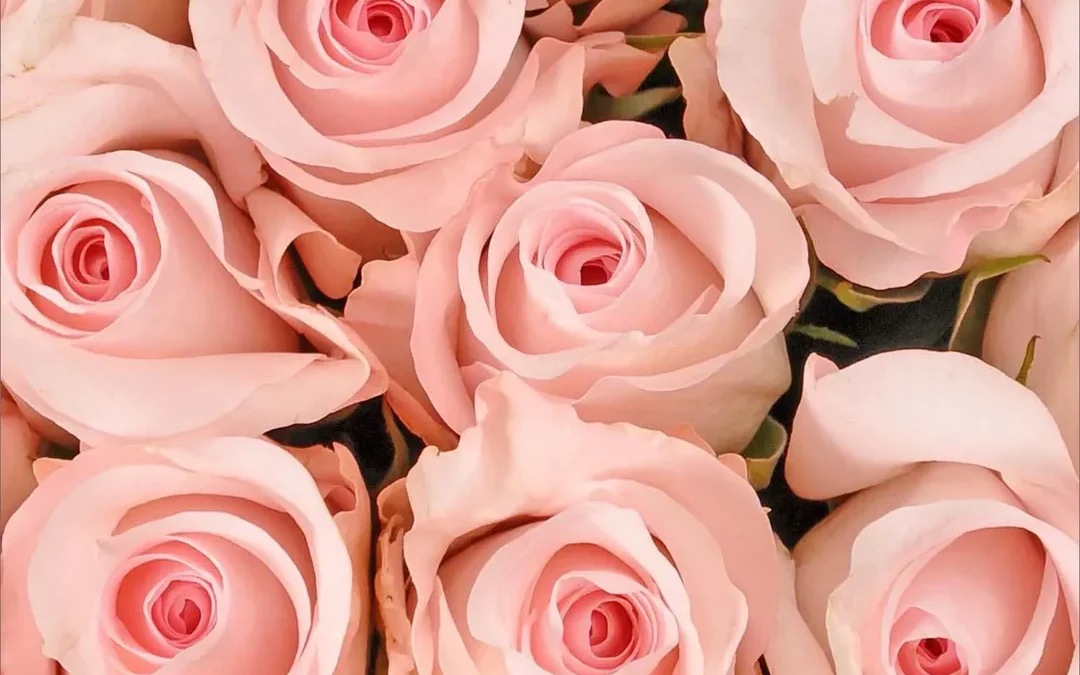
Pink has long been associated with all things girly and romantic—think roses, candy floss, and that dreamy princess aesthetic. In millinery, this translates into designs that embrace softness and allure. A pink hat can evoke feelings of tenderness and warmth, making it a favorite for weddings and special occasions. It’s the color choice that says, “I’m here to look adorable and maybe just a tad fabulous.” With its romantic undertones, pink allows wearers to express their softer side while still making a bold statement.

Pink as a Symbol of Playfulness and Youth

Beyond romance, pink embodies a sense of fun and youthfulness. Who doesn’t feel a little lighter hearted in a bright pink beret? The color has a knack for infusing a touch of play into any ensemble, reminding us not to take life too seriously. Arturo often uses pink to create whimsical designs that evoke laughter and joy, perfect for festivals or casual outings. Essentially, a pink hat is like wearing happiness on your head—an invitation to embrace the lighter side of life.

Combining Pink with Other Colors and Textures

Pink is like that friend who gets along with everyone at the party—versatile and adaptable! Pairing pink with neutral tones like beige or gray can evoke a subtle elegance, making it perfect for sophisticated outings. For a more playful touch, combine it with bright colors like turquoise or yellow. Textures also play a huge role; a silky pink fabric with a matte black will create a striking contrast, while a lace overlay can add a touch of romance.

Colors: RED & ORANGE & YELLOW

Colors: RED & ORANGE & YELLOW

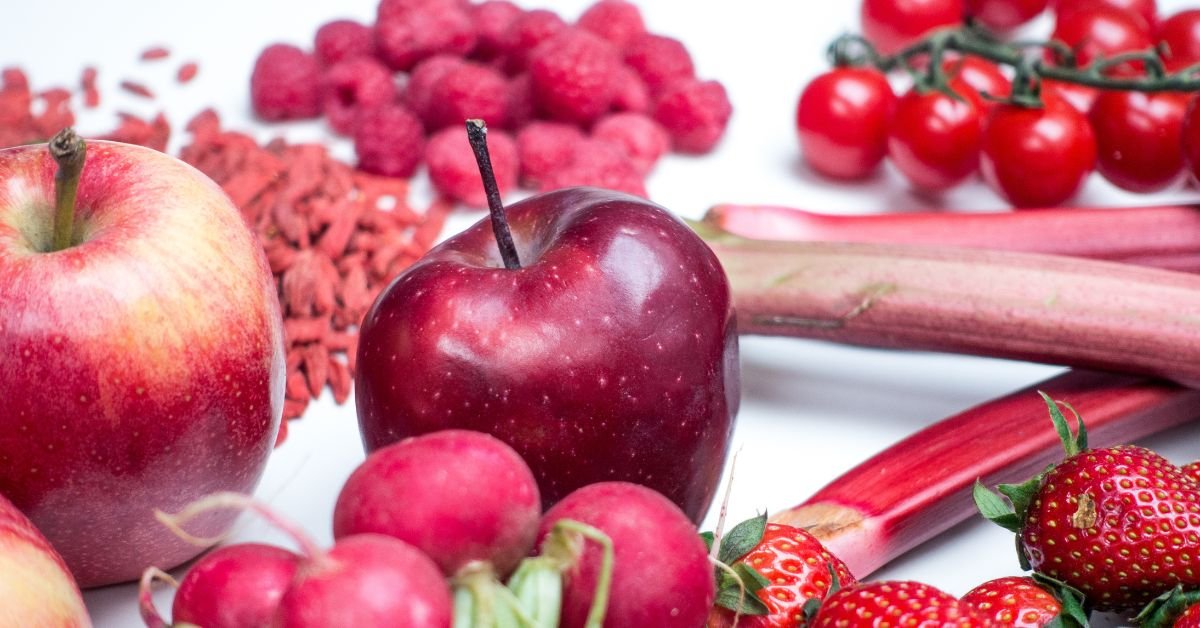
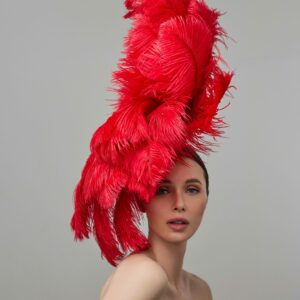
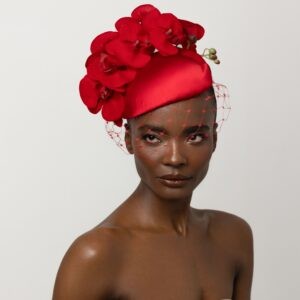
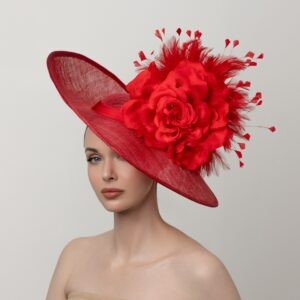
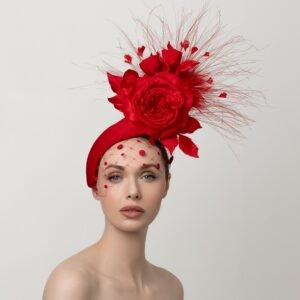
RED

Red is the color at the long wavelength end of the visible spectrum of light, next to orange and opposite violet.

Reds range from the brilliant yellow-tinged scarlet and vermillion to bluish-red crimson, and vary in shade from the pale red pink to the dark red burgundy.

Red pigment made from ochre was one of the first colors used in prehistoric art. The Ancient Egyptians and Mayans colored their faces red in ceremonies; Roman generals had their bodies colored red to celebrate victories. It was also an important color in China, where it was used to color early pottery and later the gates and walls of palaces.

In the Renaissance, the brilliant red costumes for the nobility and wealthy were dyed with kermes and cochineal. The 19th century brought the introduction of the first synthetic red dyes, which replaced the traditional dyes.

Modern surveys in Europe and the United States show red is also the color most commonly associated with heat, activity, passion, sexuality, anger, love, and joy. In China, India, and many other Asian countries it is the color symbolizing happiness and good fortune.

Showing all 6 resultsSorted by latest

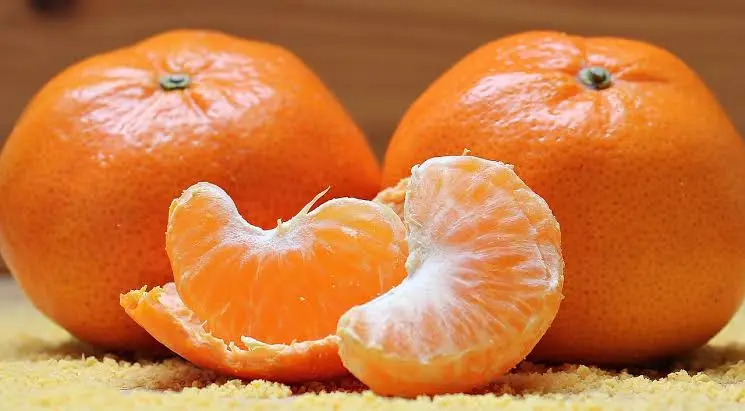
ORANGE

Spirituality and enlightenment: In Buddhism and Hinduism, orange robes are worn by monks, and the color symbolizes the highest state of spiritual knowledge and illumination.

Happiness, love, and creativity: In Chinese and Japanese cultures, orange can represent happiness, love, and good fortune. In Eastern philosophy, the orange chakra is associated with creativity.

Royalty and nationhood: In the Netherlands, orange is the color of the royal family, the House of Orange, and is a symbol of national identity.

Courage and warmth: Japanese culture also links orange to courage. In Western cultures, it can represent warmth, autumn, and harvest.

Protest and activism: In Ukraine, the color became a symbol of protest during the Orange Revolution. The United Nations' "Orange the World" campaign uses the color to raise awareness for gender-based violence.

Other meanings
Mourning and loss: In some parts of the Middle East, orange is associated with mourning.

Warning and caution: In the United States and other countries, its high visibility makes it a common color for hazard cones and life vests, while also being associated with Halloween.

Prison uniforms: In the United States, the color can be associated with prison uniforms. 

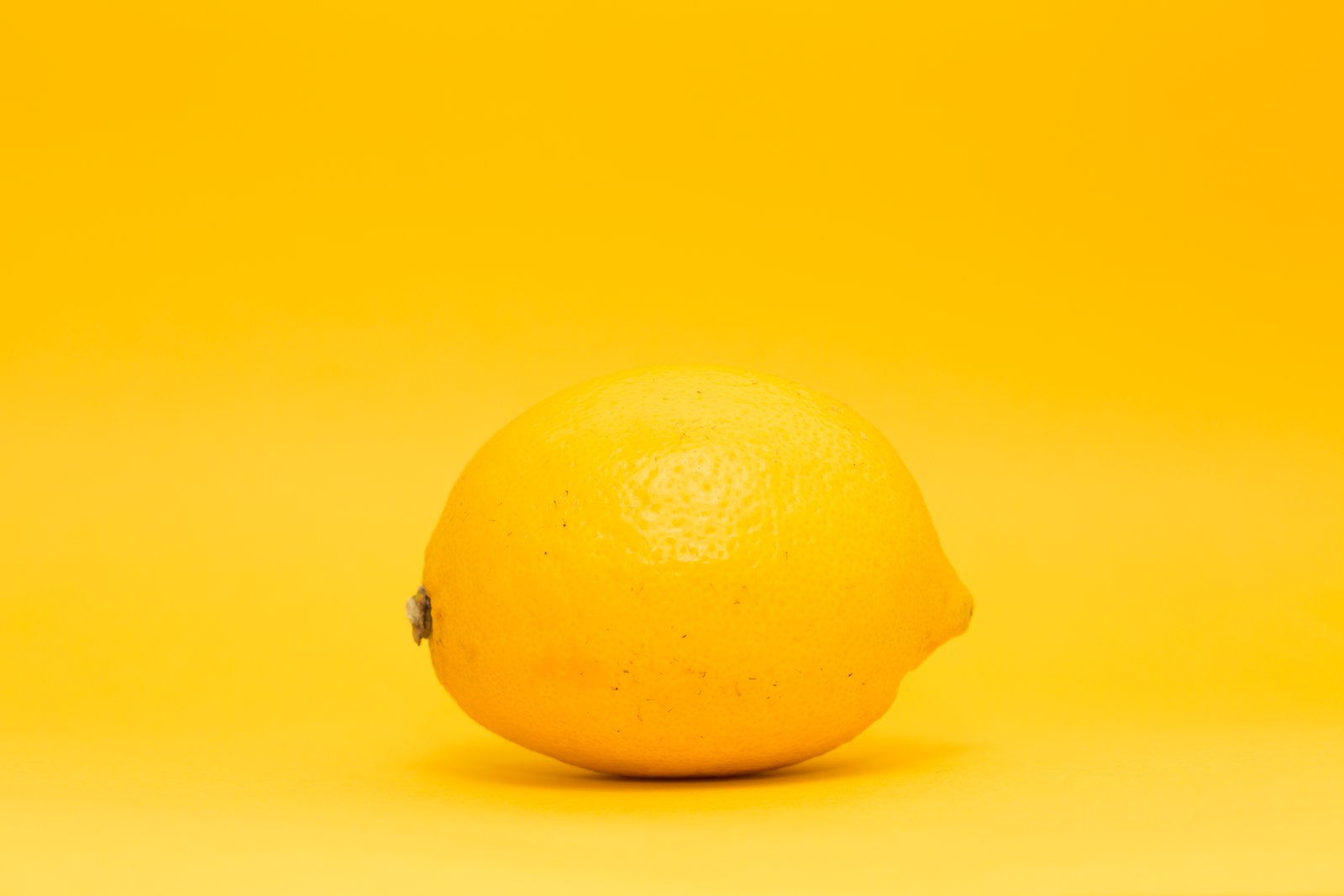
YELLOW

In late summer, as daylight hours shorten and temperatures cool, the veins that carry fluids into and out of the leaf are gradually closed off. The water and mineral intake into the leaf is reduced, slowly at first, and then more rapidly.

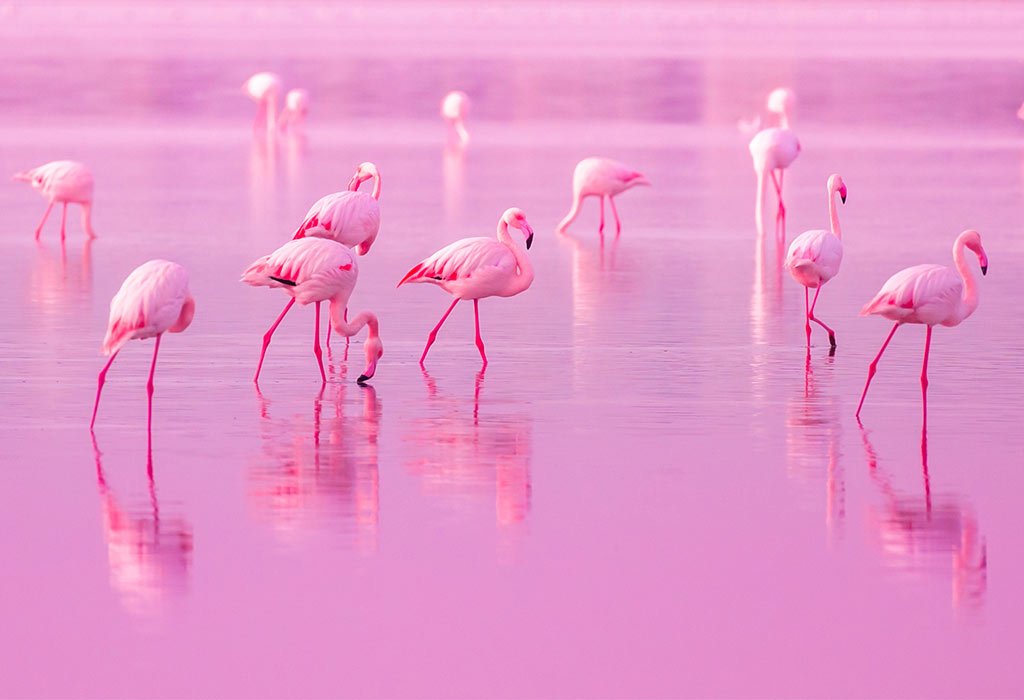
Carotenoids are common in many living things; they give the characteristic color to carrots, maize, daffodils, rutabagas, buttercups and bananas. They are responsible for the red of cooked lobsters, the pink of flamingoes and salmon and the yellow of canaries and egg yolks.

Pleasantly Perky
Hallmarked for its beaming presence, the color yellow allures with its illuminating essence. Associated with the more pleasant things in life, yellow kindles joy and happiness. Most prominently recognized as a cheerful and lively hue, yellow inspires positivity. With its effortless innocence, the color yellow resonates deeply with children. It’s for this reason why many toys are predominately yellow.

Confidence Booster
Best of all, this sunny tone bolsters self-assurance. As an upbeat and cheerful hue, yellow is inherently optimistic. The color yellow seeks to stop senseless thoughts in their tracks. Seeing the color yellow has the incredible ability to turn any negative thoughts into positive ideas. We could all aspire to be a fraction as encouraging as the color yellow.

We think an educated client (never a "customer") is preferred. Arturo also believes in being generous with his knowkledge as others have been generous with theirs to him.

This article is part of our series that explores and celebrates different aspects of millinery. Arturo Rios has created new techniques, forms and modes of constructing the world's finest hats and he wants to share and open the discussion with you.

We welcome everyone to discover how millinery is expanding, changing and evolving. Let us know your thoughts!


Classic Forms

Millinery has a long history. In this series of posts, we delve deeper into the specifics of each type of hat. Pillboxes, fascinator and derby hats are just the beginning. And Arturo wants to assist in your discovery!

Techniques

Hat-making has it's own vocabulary; definitions, terms, slang. We're here to talk about the components that make great hats.

Colors

Arturo has a unique sense of flowers. He also uses his deep understanding of how colors work and how they influence us.

Colors: Teal

Colors: Teal

Teal

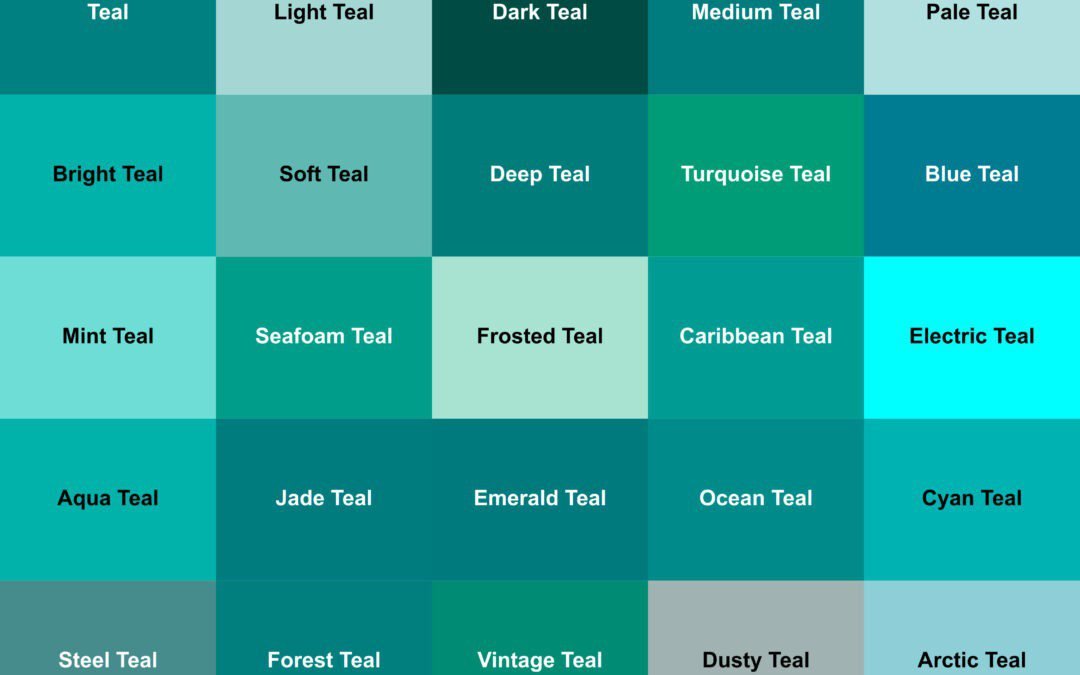
Teal combines the calming properties of blue with the renewal qualities of green. It is a revitalizing and rejuvenating color that also represents open communication and clarity of thought.

For Tibetan monks, teal is symbolic of the infinity of the sea and sky, while it is the color of truth and faith for Egyptians.

Teal pops with bright white and coral, and works well with cream, navy, browns, and pinks. It also sets off metallic colors, such as silver and gold.

Green pigments for paints and fabric dyes were difficult to obtain from nature in the past, thus they were rarely employed in clothes or heraldic emblems. While green may have been blended with blue and yellow paints, mixing dissimilar substances was frowned upon due to suspicion of alchemy. Only during the early Renaissance did the superstitious custom fade away, and in the late eighteenth century, the German Swedish scientist Carl Wilhelm Scheele found new copper greens.

What is the meaning of teal color?
Picture the warm ocean waves in Baja California, made of that color that isn’t quite blue and isn’t quite green. The water brings in the cool side of summer. It also serves as the perfect example of the color teal.

Teal was actually a bird before it was a color. The word “teal” was adopted as a color in 1917. Teal color, however, has existed as long as the ocean.

It's my favorite color and I keep returning to it. It's a great color to use in designing. Very adaptable, flexible and an eye-catching hue.

—Arturo Rios

Teal color combines the calming properties of blue with the revitalizing qualities of green. Named after the Eurasian teal duck, this color offers multiple meanings.

The history of teal color.
Teal was first a symbol of status.
Blue pigment was historically hard to produce. Green was abundant in nature, but it was difficult to create dyes and pigments that would not fade. Because both blue and green pigment were needed to make teal, the color teal was considered a color of elevated status. In Pontormo’s Carmignano Visitation (c. 1528), Mary’s teal robes contrast strikingly with the robes of three other women. This painting depicts when Mary was pregnant with Jesus.

Teal is a color honored in both church and state. Teal color offers an earthly contrast to the skies and clouds above. With its mix of blue and green, the color teal has been used throughout history for the domes of mosques, churches, and state buildings. Look no further than New York City with the Statue of Liberty celebrated in teal, too. The connection here is that teal is symbolic of where the divine meets earth.

During the Renaissance, pigments for paints and textiles became more varied.
Until the Renaissance, mixing substances to create pigments and dyes caused an ill-famed suspicion of alchemy. Only during the Renaissance did this suspicion fade, which gave way to the development of new synthetic pigments. Teal became more popular once synthetic blues and greens were produced and gained in popularity over time. By the 1980s, teal was one of the first colors used to create web pages.

The color teal across different cultures.
The word “teal” (the color) was first recorded in English in 1917. A teal is a freshwater duck known for a striking blue-green mark on its head. In the early 20th century, teal was adopted as the name of the color that the bird sports. The color teal was present before it took that name, of course. It seems as though giving teal a name brought it to the forefront of popular colors after that. Teal color had a boom in interior design in the 1950s and 1960s, and by the 1990s teal was one of the most popular colors in professional sports teams.

Teal color has a symbolic meaning that stems from its psychological effects:
teal’s psychological effects are simultaneously calming and revitalizing, which makes the history of the teal color’s significance no surprise. The color teal is especially significant for Tibetan monks. Teal represents the infinity of the sea and sky. For the Ancient Egyptians, teal was considered the color of truth and faith.

Keeps to Itself
While many are intrigued by the color teal, this hue isn’t very interested in others. In fact, it prefers to be alone. This personality trait has made teal somewhat reserved. It keeps things close to the vest and seldom comes out of its shell. If you’re interacting with teal and can’t get much out of it, don’t take it personally. Teal has boundaries, and it doesn’t appreciate it when people overstep them.

Values Uniqueness
The world isn’t homogeneous, and teal admires that. This hue understands the importance of being yourself. According to teal, we aren’t meant to blend in. In essence, teal relishes individuality. If you’re someone who doesn’t conform to social norms, you and teal will have a lot in common.

Cautious
Life is meant to be lived, but teal can sometimes lose sight of this. As an attentive color, teal is always on the lookout for danger. While there’s no reason to be unduly alarmed, teal has a difficult time finding peace of mind. It’s for this reason why this hue is generally on edge. You may notice that you feel more tense and uptight when surrounded by the color teal.

Unbiased
Teal doesn’t judge too quickly or too harshly. In other words, it’s an open-minded hue. No matter the person or situation it encounters, teal always takes the time to understand both sides of the story. This bodes well for mature and harmonious relationships. If you’re learning to be more accepting, use teal as a teacher.

Encourages Practical Thinking
Teal doesn’t tolerate irrational thoughts. It seeks to be logical in all that it does. With that said, those who spend time with teal are more likely to make informed and responsible decisions. Teal never throws caution to the wind, which makes it both predictable and reliable. If you’re looking to get back on the straight and narrow, teal will help get you there.

Promotes Relaxation
There’s no refuting that teal is wound tight. However, it still effortlessly fosters relaxation. With a little assistance from teal, you can decompress with ease. You’ll find this color in many homes for this very reason. The stress of life can make us anxious and angry, but teal reminds us that these feelings aren’t permanent. With a healthy dose of reality and understanding, teal stops negativity in its tracks.

Super Serious
With teal, excitement isn’t promised. If there are rules in place, you can bet that teal will abide by them. Failure to adhere to the rules will get teal in a tizzy. Those who don’t take themselves too seriously should limit their time with teal. After all, teal subscribes to the notion that goofing off breeds bad habits.

Prim and Proper
Teal presents itself in a very dignified manner. To some, this can be bothersome. Meanwhile, others cherish how noble teal comes across. If teal isn’t upholding this image, it regards itself as a failure. Teal’s inability to loosen up has earned it many enemies. Fortunately, teal doesn’t mind keeping a tight circle.

Rejuvenating
With its wisdom and vitality, teal breathes new life into those who desire rejuvenation. If you’d like a new lease on life, turn to teal. This color will arm you with the fresh perspective you’re looking for. Teal aims to uplift others, which it does by offering helpful insight and direction. When at a crossroads, allow teal to nudge you in the right direction.

Provides Clarity
It’s not uncommon for life’s unknowns to spark confusion. If you’re no stranger to this feeling, teal will ease your doubts. By ridding individuals of worry, teal offers emotional healing and spiritual enlightenment. These positive influences make way for optimal growth.

We think an educated client (never a "customer") is preferred. Arturo also believes in being generous with his knowkledge as others have been generous with theirs to him.

This article is part of our series that explores and celebrates different aspects of millinery. Arturo Rios has created new techniques, forms and modes of constructing the world's finest hats and he wants to share and open the discussion with you.

We welcome everyone to discover how millinery is expanding, changing and evolving. Let us know your thoughts!


Classic Forms

Millinery has a long history. In this series of posts, we delve deeper into the specifics of each type of hat. Pillboxes, fascinator and derby hats are just the beginning. And Arturo wants to assist in your discovery!

Techniques

Hat-making has it's own vocabulary; definitions, terms, slang. We're here to talk about the components that make great hats.

Colors

Arturo has a unique sense of flowers. He also uses his deep understanding of how colors work and how they influence us.

Details: The Essential Bow

Details: The Essential Bow

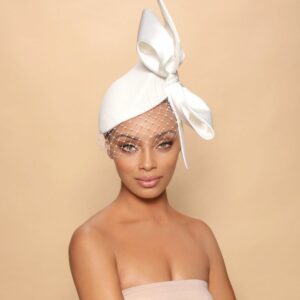
Bows have long been a quintessential element of millinery, serving not only as decorative accents but also as powerful symbols of style and individuality. From their historical roots in hat design to their modern interpretations, bows are part of a rich mix of cultural significance and aesthetic appeal.

Evolution Through the Ages

The bow’s origins can be traced back to ancient civilizations where decorative knots were used to secure headgear. From the floppy styles of the medieval ages to the tailored elegance of the Renaissance, various cultures adopted bows to enhance their hats' aesthetic charm.

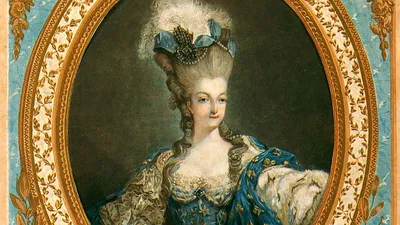
By the 18th century, bows became de rigeur in millinery, reflecting the opulence and class-consciousness of the time. They were often grand and extravagant, made from luxurious fabrics and adorned with gems, real and artificial as well as animals, plants and ephemera. 

In the 20th century, the bow transformed from show-stopping frills to subtle embellishments, thanks in part to the rise of chic minimalism and refined production methods.

Classic Bow Styles

Classic bow styles are the tried-and-true staples that have stood the test of time! From the delicate, understated ribbon bows to the voluminous floppy bows often seen on wide-brimmed hats, these styles evoke a sense of nostalgia. Classic bows are often defined by their symmetry and elegance, making them the perfect complement to traditional millinery designs.

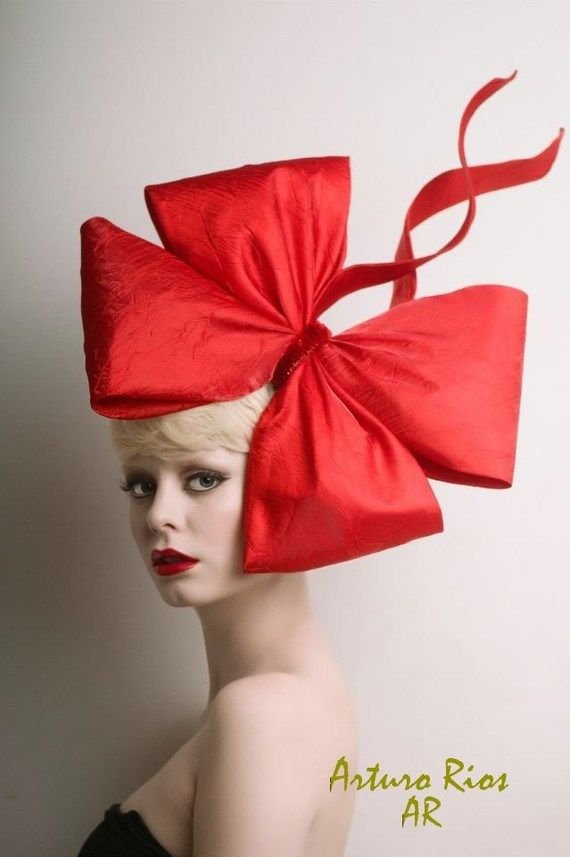
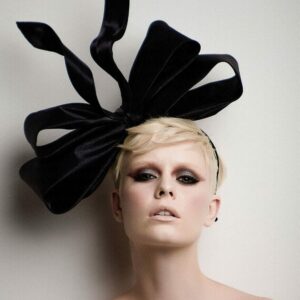
Modern bow designs take a bold turn, with styles that range from oversized statement pieces to asymmetrical, quirky interpretations. Designers play with forms, often opting for unconventional knots or layering techniques that create eye-catching silhouettes. 

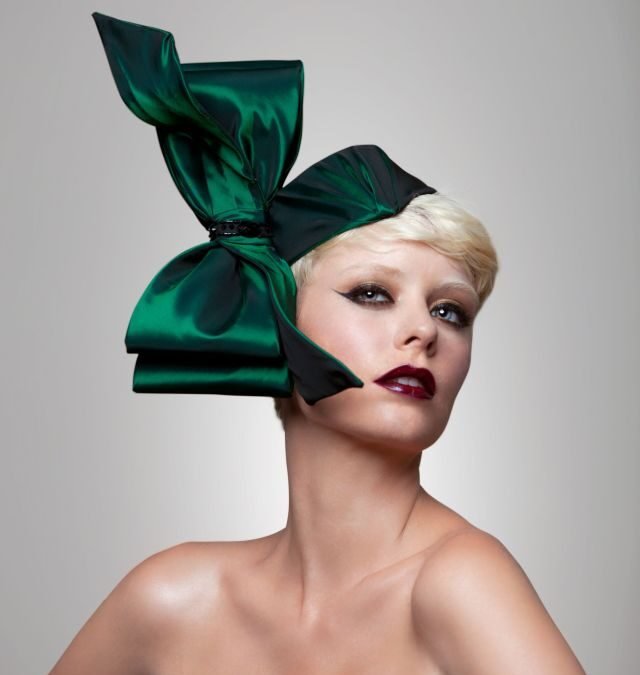
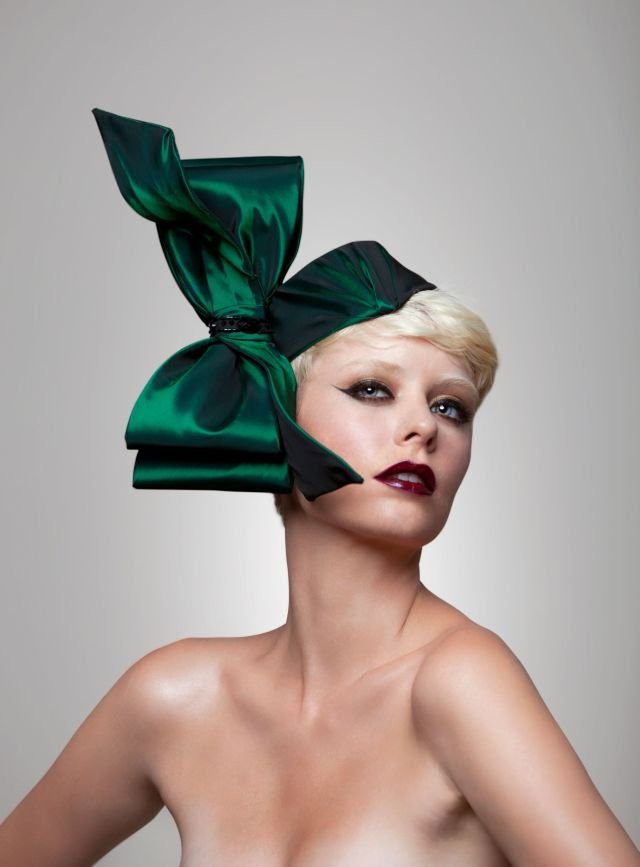
Arturo plays with both classic bow styles and reimagined forms in his hat collections. His most recent bows are constructed to play with the ideas of proportion with many details for specific occasions.

“The bow itself can become a fascinator if it is made with new proportions in mind. How it works with the other details of the hat is when I have my most fun as a designer.” 

Materials

“Knowing how to manipulate the fabric is the key, Arturo adds that “what foundation or fusing is used to keep them in shape is important to the over-all design. Crystal-silk, satins and taffetas give well-made bows a luxuriously shiny look. They are opulent. Stiff silk abaca is important in millinery designs as well to assure that the hat can maintain its form in different  environments.”

Color and Pattern Choices

Bows are not just about shape; they’re a canvas used to display the designer’s creativity. 

Arturo uses his vast palettes of spring-time pastels, saturated winter colors and playful patterns to place the hat at the  center of attention. 

The color a​nd pattern choices can transform an ordinary hat into an extraordinary accessory. Bright and bold hues scream for attention, while pastel tones offer a subtle elegance. Patterns—floral, polka dot, or geometric—bring an added layer of interest, allowing wearers to express their personality through every tie and knot.

Proportions and Placement

The magic of a bow lies in the proportions and placement! A well-placed bow can accentuate a hat's silhouette, draw eyes to the face, and add visual interest. Larger bows can be a statement of confidence, while smaller bows may convey a touch of whimsy. Where you place the bow—at the back, off to one side, or front and center—can change the entire hat's dynamic

Bows have the unique ability to serve as focal points in any outfit. A striking bow can turn a simple hat into a conversation starter, drawing attention and compliments. Whether it’s the anchor of a bridal ensemble or a playful splash on a casual look, bows have a flair for standing out. They harmonize with other elements of fashion, creating balance while asserting their own stylish power.

Bows in Different Cultures

Bows are universal symbols of charm, appearing in various cultures with unique meanings. In Japan, the “furoshiki” bow wraps gifts with elegance, while in Western cultures, the bow often represents femininity and grace. Different materials and styles of bows can signify different things, showcasing how this simple knot transcends borders and embodies culture.

In many cultures, ceremonial hats adorned with bows carry profound significance. From graduation caps to wedding veils, bows often represent milestones and celebrations. They serve as visual markers of important life events, showcasing individuals' achievements and transitions. 

Influence of Fashion Icons

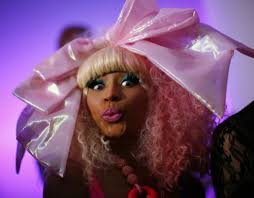
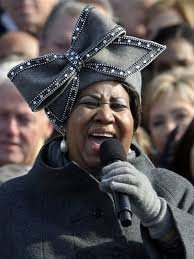
Throughout history, influential figures have made bows synonymous with their personal style. Marie Antoinette’s extravagant hairstyles adorned with oversized bows echoes the excesses of the royal court. Audrey Hepburn’s iconic pillbox hat framed in Breakfast at Tiffany’s shows how these notable personalities showcased how a bow can elevate a hat from mundane to magnificent. Recent bow-centric moments include Aretha Franklin at the Obama inauguration, Jackie Kennedy, Lady Gaga, Nicki Minaj and a plethora of the world’s finest fashion magazines featuring them in most publications.   Fashion icons have long embraced the bow, turning it into a statement piece rather than just a decorative afterthought. Think of the likes of Kate Middleton and Lady Gaga—each has wielded the bow like a magician with a wand, making it the star of the show on everything from fascinators to wide-brimmed hats.

Seasonal Celebrations

From Easter bonnets to holiday parties, bows are the ultimate festive accessory. They have the power to elevate seasonal hats to a whole new level of celebration. Whether it's a cheerful pastel bow for spring or a glitzy bow for winter festivities, they’re the cherry on top of any seasonal ensemble.

Custom Designs for Individual Clients

Arturo is a master milliner, and he depends on input from his clients. You are never a customer, always a client who takes part in the creation of your personal hat masterpiece. Tell Arturo your ideas of how bows might elevate your new AR hat.
We think an educated client (never a "customer") is preferred. Arturo also believes in being generous with his knowkledge as others have been generous with theirs to him.

This article is part of our series that explores and celebrates different aspects of millinery. Arturo Rios has created new techniques, forms and modes of constructing the world's finest hats and he wants to share and open the discussion with you.

We welcome everyone to discover how millinery is expanding, changing and evolving. Let us know your thoughts!


Classic Forms

Millinery has a long history. In this series of posts, we delve deeper into the specifics of each type of hat. Pillboxes, fascinator and derby hats are just the beginning. And Arturo wants to assist in your discovery!
Techniques

Hat-making has it's own vocabulary; definitions, terms, slang. We're here to talk about the components that make great hats.

Colors

Arturo has a unique sense of flowers. He also uses his deep understanding of how colors work and how they influence us.